
Endless Puncher
Rollic GamesAction
2.1154.00 Reviews
- Version
- 1.6.01
- Installs
- 100.00K
- Age Rating
- Everyone 10+
Screenshots
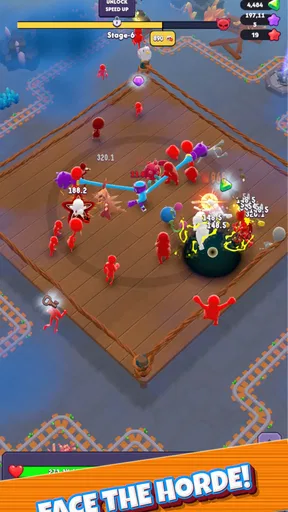
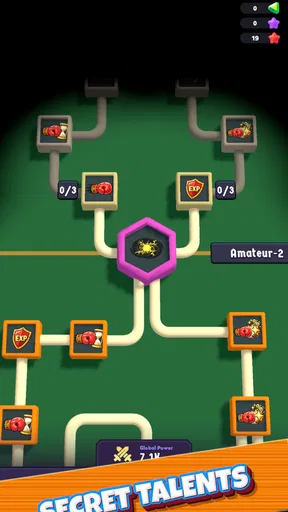
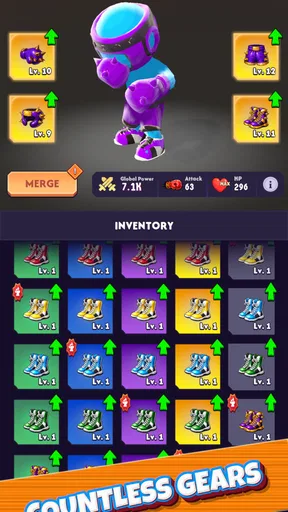

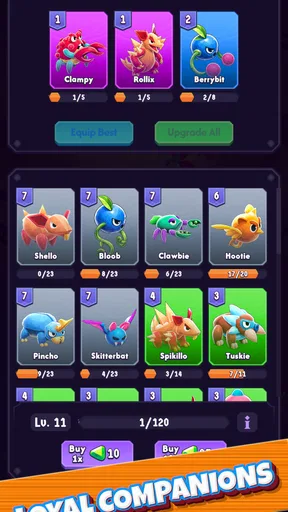
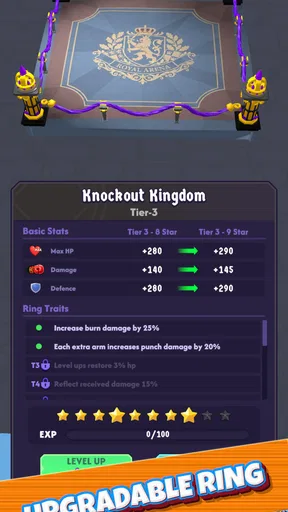

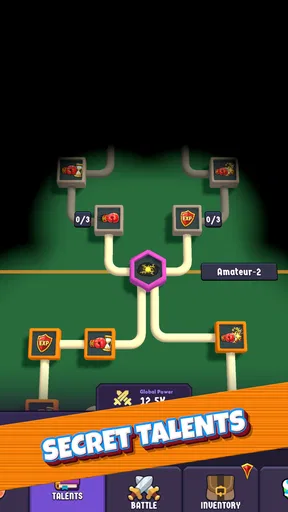
Our Review of Endless Puncher
 Analysis by Appyee
I approached Endless Puncher as the kind of action game people might pass around on a household phone: quick to open, easy to understand, and built around the simple pleasure of hitting things rather than learning a complicated control scheme. That first impression is accurate, but the game is more demanding in practice than its short store description suggests. It asks whether repeated punching can stay entertaining when the novelty wears off, and my answer is mixed.
Developed by Rollic Games, this free Android game sits in the action category and is aimed at players who want a very direct experience. The basic appeal is obvious: there is no elaborate premise to study before playing, and the central action can be understood almost immediately. I can see it working as a short distraction while waiting for food, taking a break, or handing a phone to someone who does not normally play games.
At the same time, I would not treat it as a universally safe recommendation just because it is simple. The average rating is 2.1 from around 600 ratings, with more than 150 written reviews, so the public response is clearly cautious. That does not automatically make the game poor, but it tells me that convenience and a low learning curve are not enough to overcome every player’s concerns about repetition, monetization, or overall polish.
How Endless Puncher Fits Into Shared Household Play
When I think about Endless Puncher in a shared household, I see it working best as a short-turn option rather than a game everyone settles into together. Its straightforward action makes passing a phone around easy, but I’d agree on turn lengths and spending boundaries first. That small bit of coordination can keep a quick distraction from becoming a dispute over the device or an unexpected purchase.
A practical game for short turns
The strongest household use case is a shared device with several people looking for something that can be played in short bursts. Imagine a family waiting for an appointment: one person plays for a few minutes, passes the phone over, and the next person tries to beat that informal result. Because the premise is so direct, nobody needs a long explanation or a tutorial session from the previous player.
That simplicity also makes it approachable for a relative who rarely plays action games. A child who understands tapping and timing can probably grasp the basic idea faster than they would understand a card battler, a role-playing game, or a strategy title with several menus. An adult who only wants a brief distraction can start without committing to a story or a long match.
However, the shared-device appeal depends on keeping expectations realistic. This is not the kind of game I would choose for a family evening where everyone wants a deep cooperative activity. The central attraction is personal progress and repeated action, not conversation, planning, or a rich multiplayer session. It can support informal turn-taking, but it should not be mistaken for a complete group game.
Why the simple action can still divide players
Some players enjoy a focused loop that removes everything unnecessary. For them, the pleasure comes from reacting quickly and trying to improve one attempt at a time. Others need noticeable variety, character development, exploration, or a stronger sense of long-term purpose. If you belong to the second group, the straightforward punching concept may feel thin after the first few sessions.
That distinction matters especially on a phone used by several people. One household member may enjoy the immediate action, while another may open the game once and decide that it lacks enough depth. I would not interpret that difference as a control problem; it is mainly a question of what each person expects from an action game.
Compared with a traditional arcade game, the advantage here is the low barrier to entry. Compared with a fighting game, the trade-off is that you should expect less emphasis on matchups, technical combos, and tactical mind games. Compared with a casual puzzle game, it offers more physical energy but potentially less variety in the moment-to-moment routine.
What I would do before handing it over
On a shared phone, I would play the first session myself before giving it to a younger or less experienced player. That is not because the controls are difficult; it is because I would want to understand the pacing, the interruptions, and the way purchases are presented. A quick personal check is more useful than assuming that every free game behaves the same way.
I would also agree on a simple turn boundary. For example, each person can take one short attempt or play until a natural stopping point. Without that arrangement, a player who becomes invested in improving a result may keep the phone longer than intended. The game’s accessibility makes it easy to pass around, but it does not create household rules for you.
Setup boundaries matter more than the download
The game is free to download, which removes the biggest initial barrier for trying it. Its age guidance is Everyone 10+, so I would treat it as more appropriate for older children and up rather than automatically suitable for every child in the home. That distinction is important when a device is shared by siblings with different ages.
There are in-app purchases ranging from $2.99 to $179.99 per item. That is the detail I would take most seriously before allowing unsupervised use on a family device. A free starting price can make a game feel harmless, but optional spending changes the practical decision. I would review the device’s purchase protections and make sure the person playing understands that free installation does not mean every part of the experience is free.
I would not rely on the game’s age label alone to decide whether it belongs on a child’s device. Age guidance is a useful starting point, not a substitute for knowing how a particular child reacts to action, repetition, or purchase prompts. In my view, the best arrangement is an adult’s first look followed by a clear household rule about spending.
Account boundaries and a shared phone
A shared device creates a separate issue: whose progress is being represented? If several people use the same installation, I would avoid assuming that each player has a completely separate identity or that progress will naturally remain distinct. Before anyone invests serious time, I would check how the current version handles the local playing experience and decide whether informal turn-taking is enough.
This is especially relevant when one person cares about a personal best and another simply wants to experiment. A shared installation can be convenient, but convenience and individual ownership are not the same thing. If separate progress is essential to your household, I would test that expectation early rather than discovering later that the game is better suited to one primary player.
The current version is 1.6.01, and the listed minimum operating system is Android 7.1. That makes the game accessible to a range of older Android devices, at least from a compatibility standpoint. Still, I would leave enough storage and battery headroom for ordinary phone use, particularly if the device already serves as the household’s main communication tool.
Coordination without turning play into an argument
Endless Puncher works best in a shared setting when the rules around it are more organized than the game itself. I would decide who gets the first turn, how long a turn lasts, and whether players are allowed to retry immediately. Those small choices prevent the common problem where one person keeps restarting because they are close to a better result.
A useful approach is to separate practice from competition. During practice, a player can explore the controls without pressure. During the actual household challenge, everyone gets the same number of attempts. This makes comparisons fairer and helps prevent the most experienced person from dominating simply because they have had more time with the game.
I would also avoid treating a high score as a measure of skill that everyone must match. The game’s appeal is personal improvement, and different players may enjoy different goals. One person may care about lasting longer, another may enjoy learning the rhythm, and a younger player may simply like the physical theme. Keeping those goals separate makes the experience more welcoming.
Age, trust, and the action theme
The Everyone 10+ rating gives parents and guardians a useful age context, but it does not answer every household question. I would consider the individual child’s maturity, their understanding of fictional action, and whether they can follow the spending rule. A child who can handle the theme responsibly may enjoy it, while another may find the repeated punching less comfortable.
I also think trust should include device care. Fast action games can encourage hurried tapping, and a shared phone is more valuable than a single play session. I would ask younger players to sit down, keep the device secure, and stop if the phone becomes warm or the battery is running low. Those are ordinary precautions, but they matter more when one device serves several people.
For adults, the age label is less of a concern than the purchase range and the repetitive design. An adult who wants a quick action toy may find the game suitable. An adult looking for a richer fighting experience should probably choose a title with deeper combat systems, clearer long-term progression, or stronger competitive structure.
Three useful ways to get more from the game
My first practical tip is to use short, deliberate sessions rather than leaving the game open as background entertainment. The uncomplicated loop is more enjoyable when I treat each attempt as a small challenge. Playing continuously can make the repetition more obvious, while a short break gives the action a chance to feel fresh again.
My second tip is to use a shared score routine instead of arguing over who is “best.” Each player should get an equal number of attempts, and the household can record only the result that matters to them. This turns a potentially repetitive game into a lightweight social challenge without pretending that it is a full multiplayer experience.
My third tip is to separate curiosity from spending. I would first decide whether the core punching loop is enjoyable on its own. If it is not, buying an item is unlikely to solve the underlying problem. The wide purchase range makes it particularly important to judge the basic game before considering optional extras.
Where the game falls short
The main weakness is the risk of repetition. A single central action can be satisfying, but it places a heavy burden on pacing and variety. If the game does not keep giving me a reason to refine my timing or continue another attempt, the initial novelty fades quickly. This is where a more substantial action game has an advantage: it can refresh interest through new opponents, abilities, environments, or strategic choices.
The public rating reinforces that caution. With an average of 2.1, I would not recommend installing it solely because the concept sounds amusing. I would approach it as a trial, especially if you are sensitive to interruptions, aggressive monetization, or a loop that feels too narrow. The game may suit someone who wants a tiny action distraction, but that is a smaller audience than the broad phrase “action game” might suggest.
Another limitation is that a free game with optional purchases can be awkward on a household device. Even when nobody intends to spend money, the possibility of accidental or impulsive purchases changes how I would supervise it. This is not a reason to reject the game automatically, but it is a reason to establish boundaries before the first shared session.
Who should try it and who should skip it
I would recommend trying it if you want a free, immediately understandable action game for short sessions, particularly on a compatible Android phone and in a household where people enjoy taking turns. It may also suit players who like repeating a compact challenge and improving through practice rather than exploring a large game world.
I would skip it if you want a deep fighting game, a story-driven adventure, or a reliable group activity with clearly separated player identities. I would also be cautious if the device is used by children younger than the listed age context, or if purchase controls are not already established. In those situations, a simpler offline game with no spending layer may be a better household choice.
My final view is guarded rather than enthusiastic. Endless Puncher is easiest to recommend as a brief, supervised action distraction, not as the main game on a shared family device. The free entry point and simple controls are genuine strengths, and the developer’s compact concept can work when everyone understands its limits. But the low average rating, repetitive premise, and potentially expensive individual purchases mean I would test it first, set clear boundaries, and keep an alternative ready for players who need more depth.
For my own household-style use, I would allow a short trial and judge the reaction after several turns rather than after the first exciting minute. If people are laughing, improving, and willingly stopping when their turn ends, the game has found its role. If the conversation quickly shifts to boredom, spending, or arguments over the device, I would remove it and choose a more structured alternative. That is the honest position I would share with a friend: try it for the quick action, but do not confuse easy access with lasting value.
Verdict
Strengths of Endless Puncher
- Simple controls make it easy to start playing immediately.
- Fast-paced rounds are well suited to short gaming sessions.
- Punching mechanics feel responsive and satisfying on mobile.
- Progression encourages players to return and improve their results.
- The colorful presentation gives the game a light, arcade-style feel.
Limitations of Endless Puncher
- Gameplay can become repetitive after extended play sessions.
- Difficulty may feel uneven as challenges increase.
- Limited variety can reduce long-term appeal for some players.
- Frequent retries may become frustrating without enough new content.
- Some devices may experience occasional performance issues.
Other Releases by Rollic Games
View All


Similar Picks in This Category
View All
Temple Run 2: Endless Escape
Imangi Studios4.1

PUBG MOBILE
Level Infinite4.3

Free Fire: 9th Anniversary
GARENA INTERNATIONAL I4.4

Talking Tom: Hero Dash Run
Outfit7 Limited4.3

slither.io
Lowtech Studios3.9

Sniper 3D:Gun Shooting Games
Wildlife Studios4.6
Frequently Asked Questions
What is Endless Puncher, and how does the gameplay work?
Endless Puncher is an action-focused game built around continuous punching, quick reactions, and surviving increasingly difficult challenges. After starting a run, you generally face waves of enemies or obstacles while trying to maintain your momentum and improve your score. The controls are designed to be easy to understand, but timing, positioning, and choosing when to attack become more important as the difficulty increases.
Is Endless Puncher free to download and play?
Endless Puncher can typically be downloaded and played without an upfront purchase, although the exact monetization system may depend on the version available for your Android or iOS device. Free versions may include advertising, optional purchases, or unlockable content. Before installing, it is worth checking the store listing for current information about ads, in-app purchases, and whether any features require payment.
Does Endless Puncher require an internet connection?
The main punching and survival gameplay in Endless Puncher may be playable offline, which makes it suitable for short sessions while traveling or when mobile data is unavailable. However, some functions can still require an internet connection, including advertisements, cloud features, online rankings, updates, or purchases. Availability may vary by platform and version, so test offline play after installation rather than assuming every feature works without connectivity.
Is Endless Puncher suitable for children and casual players?
Endless Puncher is generally approachable for casual players because its core concept is simple and the controls can be learned quickly. Nevertheless, the game may become demanding as enemy patterns, speed, or difficulty increase. Parents should review the age rating, cartoon violence, advertising, and possible in-app purchases before allowing younger players to use it. There may also be leaderboards or other features requiring additional supervision.
What should I check before downloading Endless Puncher on Android or iOS?
Before downloading Endless Puncher, check that your device meets the operating system and storage requirements shown on the official Google Play or App Store page. Also review recent user feedback, permissions, developer information, advertising details, and in-app purchase disclosures. Installing from an official store is the safest option. Keep enough free storage available, since updates and temporary game files may require more space than the initial download.
Play our best games!


